Monday, November 12, 2007

An Acorn for Ochs

Far too long ago, I was discussing our mutual admiration for Phil Ochs (Wikipedia entry) with Tom over at the similarly named blog Anatomy of Melancholy.

Phil, for those of you too young to remember, was a singer/songwriter of topical songs. I hesitate to call them "protest" or "political", although they were full of both. Phil's knack was to humanize our inhuman treatment of each other, and to point out our failings that allowed, if not supported, the sins of our society. His was the voice of the disappointed optimist, the disenchanted patriot, the American dreamer who found himself in a nightmare.

I have always found his writing to be clearer and and far more poetical than Bob Dylan. The only reason I have ever been able to devise for the latter's success, is the obscurity of his images. Ochs' vision was clear, his songs poignant and beautiful, not the hodge-podge of linguistic pyrotechnics that is the hallmark of Dylan.

Take, for example, the following verses from "Crucifixion":

Then this overflow of life is crushed into a liar
The gentle soul is ripped apart and tossed into the fire.
First a smile of rejection at the nearness of the night
Truth becomes a tragedy limping from the light
All the heavens are horrified, they stagger from the sight
As the cross is trembling with desire.

They say they can't believe it, it's a sacreligious shame
Now, who would want to hurt such a hero of the game?
But you know I predicted it; I knew he had to fall
How did it happen? I hope his suffering was small.
Tell me every detail, I've got to know it all,
And do you have a picture of the pain

Phil's love songs were more tender, his satire more biting, his soul more bared. He didn't pull any punches, nor did he soft-pedal his beliefs. Whether he was telling the segregationist state of Mississippi to "find another country to be part of", exhorting unions to live up to their own principles and support the rights of black-Americans, or wryly pointing out the hypocrisy of liberals, he was clear, forthright, funny, and, above all, brave.

When Phil committed suicide after a long struggle with manic-depression, it shook me to my core. Even writing about it now overwhelms me and the sense of loss persists after all these years. I was a folk performer too, and I used much of his later material "Changes', "Pleasures of the Harbor", "Crucifixion", "Outside of a Small Circle of Friends". I was not alone in my admiration either. My friend Tom, mentioned above, sent me a recording of a living room session of Phil and another great songwriter, John Lennon, talking and playing together.

Yesterday, I followed a link that I'd bookmarked from the Kottke blog to a website containing podcasts of a 24-show series about Folkways Records, a seminal source for many of us older Folkie/Hippie types, and an archive of some of the most eclectic and interesting recordings ever made. Although originally a commercial enterprise and labor of love of its founder, Mo Asch, it is now a part of the Library of Congress.

I was surprised to see that the 23rd show of the series was dedicated to Phil (MP3), because he had not recorded much that was published by Folkways other than those contributions he had made to their audio periodical Fast Folk Musical Magazine.

Needless to say, it was the first show I listened to.

About halfway through the hour-long presentation, I started to feel sick-at-heart. A deep sadness came over me as I realized that much of what Phil sang about then has not changed. Some of the situations have remained, but even in those cases where they have not, the prejudices, apathy, selfishness, and arrogance that he saw have merely been pointed at different targets.

... and it makes me ill that there are no voices with the same power as Phil's being raised in opposition. We systematize, we categorize, we study and send things to committee, while people are degraded, starved, killed. We look for political or systemic solutions, thinking somehow that we can legislate ourselves into a Utopia, while simultaneously ignoring the human cost of delay and the inevitable failure to actually do anything.

Why are we such sheep? Why do we passively let our potential to be a great country be suborned to financial interests?

I'm not ranting from some angelically higher position either. The sickness in my heart comes from the realization that I too have sunk into middle-aged apathy, that I have become the liberal that Phil spoke of, older and wiser and selfish. I know that it will be an effort to change, but I must. I cannot keep on floating in apathy.

I don't think that I have the talent, or appeal, needed to take on the job of changing this country alone. So I'd like my readers to consider this a challenge, a seed, perhaps ... an acorn. I'll deal with my own apathy, but someone needs to energize, inform, entertain, and start people thinking again of what American values really are. We have people who make us laugh with their clear vision, but none, as yet, strong enough to mount a counter-assault on the money-grubbing, indolent, self-serving power structure.

Phil, in one of his most famous songs, said "I ain't marchin' anymore", but that call to action has become an excuse for inaction. We need to march. We need to act. We need to do something to take back our country from the plutocrats.

Can anyone out there sing? Can anyone out there lead?

I'm tossing this verbal acorn out in the hope that another Ochs will grow.

Monday, November 05, 2007

A DAMNED Good Review!

I found this review and, as a certifiable superannuated hippie I say unto you, I have gazed upon these words and they are true.

This book was the cause of far too many saccharine overdoses amongst my brothers and sisters in motley, and, as a friend once opined, the presentation of this volume to a loved one oft signaled the end of the relationship.

A Shining Moment

I am not a sports fan. I'll spare you having to listen to the usual diatribe about ... sorry, I said I'd spare you that.

I watched the World Series this year. It was unusual for me to do that since, after a 5th grade field trip to Fenway Park where I watched uncomprehendingly as Ted Williams was intentionally walked each time at bat, I have never really followed the game. This year I was seduced into watching.

I'm glad I did, because I saw a moment during the games that impressed me more than I expected. It was a real high point, and it probably isn't one that you'd expect.

In the bottom of the fifth inning, Aaron Cook, the Rockies pitcher was batting. He laid down a pretty bunt that was placed just right on an unexpected trajectory. The Red Sox fielders had to scramble for it, and Cook got to first base.

For just an instant the cameras focused in on first ... and that's the moment that made the series for me. Cook was standing with David Ortiz and they were laughing. It was easy to imagine the conversation. Ortiz admiring the sweet shot and Cook delighted and somewhat amazed at being on base.

It seemed to me to be a show of good sportsmanship, an acknowledgment that the game was indeed just a game. 

If I saw more moments like that, I might even become a fan.

Wednesday, October 31, 2007

The Perfect Keyboard

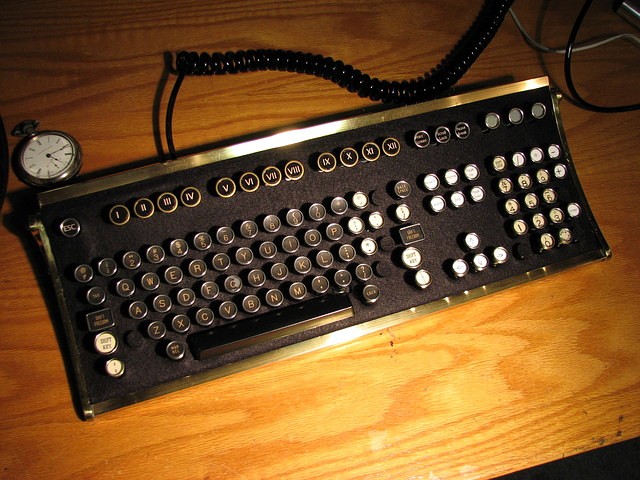
My son Mo found the perfect keyboard for me.

It was made by Hieronymus Isambard "Jake" von Slatt. You can see the step-by-step of the process at his website linked in the title of this post. Apparently a colleague will be making them for sale, but seeing the amount of work that goes into them (and being self-aware enough to know how hard I am on my devices), I know that I'll not be able to afford one.

Tuesday, October 30, 2007

Thrift

I've lived and traveled all over the world, but mostly I have been a resident of one or another of the New England states. I have been lucky enough to have met some people with the old yankee outlook on things.

There is much about these yankees that many would consider insular and anachronistic ... what tourist bureaus would call "colorful". But they are a dying breed and I am sorry about that.

I am particularly sorry that they have been caricatured to the extent that some of the lessons that they could teach us have been diminished to the point that we no longer see the virtues as anything other than quirks, fodder for jokes, funny postcard content.

That is a shame, for at the base of the yankee character is the stuff that made this country great, and some of those attitudes, which to many seem quaint, could teach us how to stand tall again.

We laugh at the old story of the man who stops to ask a farmer for directions to a town. The farmer ponders several different routes then finally opines that "You can't get there from here." How dumb could this farmer be to not even know how to get to a nearby town? How foolishly self-centered not to realize that you can get anywhere from anywhere.

But let's think about it. This farmer cannot give directions to the town because he doesn't need to know how to get there. His world, his life is the farm. For him, the town is a place to go only when you must, and only for a purpose. He'll go to the closest town to buy what he cannot make himself, and that is very little. His knowledge is centered on self-sufficiency. He does for himself and for his family and neighbors. He may not know the way to that town, but he knows how to tease a crop of corn out of rocky soil, how to sharpen an axe, how to build a house, how to dig a well.

To him, the fool is his questioner. The farmer would not start plowing, or framing a barn without a plan, but this traveler has set out on the road without one. Why do we consider the lost traveler the smart person, venturing out on the road unprepared? Why is the farmer foolish simply because the traveler has asked him a question the answer to which the farmer has no need to know?

But I seem to be drifting into a rant and there is one of these yankee characteristics that I want to talk about today. It has to do with my recent article on waste.

I posted a story on this blog a while ago about a miser who recycled his first wife's gravestone for use as a cooking stone. The story works because the degree of thrift seems to us to be outrageous ... and perhaps it is. But then, with all due respect to Thomas Lynch and his brethren in the funeral industry, perhaps the profligate use of natural resources to memorialize a dead body is a bit outrageous as well.

Personally, I would prefer to be ground up, reduced to compost and used to fertilize a garden. As the Fugs once wrote in their delightful "Burial Waltz":
"Do not surround me with wreaths of flowers
nor place upon my body the signs of a fetish
nor crescent, cross, phallus nor sun.
But bury me in apple orchard
that I may touch your lips again."

As an historical researcher, I am grateful that my attitude is not common, but I understand the miser's point-of-view that the needs of the living trump the memorializing of the dead.

When I see a cemetery, the neatly mowed lawns of a suburb, golf courses, parking lots, I think of waste ... waste of resources, waste of opportunity. When I see 15-room McMansions built for a family of three and costing a small fortune to heat, or SUVs with gas tanks that cost a day's pay to fill, I think of the small rooms of old New England farmhouses that minimized the use of fuel.

And isn't it odd that our response to this waste is to computerize and add new devices to the mix, as if saving oil by building controls justifies adding the poisonous by-products of their manufacture into the eco-system.

Why is it that we find the yankee virtue of thrift so hard to implement?

There's a magazine that I've seen, I think it's called "Real Simple" (I can't be bothered to check right now). I was leafing through it one day and found myself simultaneously amused and irritated that nearly every "simple" solution involved buying something. What an oddly perverse idea.

Sadly, it's too common an idea. Our concept of fixing is to replace. Our idea of thrift is to add. We no longer make do.

I've been grumbling on for too long, so I'm going to bring this to a close with a few facts, a prediction and an anecdote.

In spite of the fact that new oil reserves have been discovered lately, the earth is a closed system and at some point we will have succeeded in moving it all up to the surface.

This makes most people think of higher gas prices and alternative fuels.

But think of this ...

Asphalt is a petroleum product. When the oil is gone, there won't be anything left to patch our roads for the alternative energy cars.

Look around you. How much of what you see just in your room is made of plastic? Just the shopping bags you use to bring stuff home from the store take 12 million barrels of petroleum a year to make.

Think of this ...

Many medical devices, both high and low tech are made of plastic. disposable syringes, medical pumps, artificial hearts, eyeglasses, and on, and on ...

I predict that in the, not-too-distant, future there will be a new occupation. Perhaps it will happen, as a happy parallel to the gold rush of 1849, in 2049. The new 49ers will race to stake claims on landfills and dumps, where they will dig mines to extract the new gold ... all the plastic that we've so casually discarded for all these years. Most of us will pay small fortunes for medical devices made from the recycled plastic. The rich, of course, will have it molded into jewelry in order to show their status and ability to waste.

Now for the story.

Many years ago I lived in a small town here in New England. Town meetings were always a treat. At one of them there was a heated argument over the state of one particular road in a thickly settled area near a lake. The residents of that area were upset that the road had not been repaired in some years and that the pot holes were causing damage to their cars. Eventually the repairs were voted on and approved.

The next motion was an addendum. A committee of parents many of whom were the same people that proposed the road repair, rose to request that the repairs should include speed bumps in order to prevent reckless drivers from endangering the children who walked along or played near the road.

The debate had barely begun when an older man got to his feet to be recognized. He was one of the oldest citizens of the community and had lived there all his life.

The room quieted with respect.

"It seems to me," he said, "that we're talking about spending money on a problem that has solved itself."

When the vote was taken again. the road repair was revoked.

I do love a good diatribe

Some people think I'm politically inconsistent. I'm not. I just can't find a side that I agree with totally. Some of my friends call me a "liberaltarian" and I guess that's as close a label as I'm likely to get ... not that I want to be labeled.

Be that as it may, I do love a good and amusing rant, especially when there's a smidgen of truth at its core. Which is why the link in today's header is to a bit of delightful vitriol from P.J. O'Rourke.

Reading P.J. makes me feel like intoning like Sidney Greenstreet, "I'm a man who likes talking to a man who likes to talk."

By gad P.J., you are a character and no mistake.

Sunday, October 28, 2007

How to make people happy

The following passage is from a book published in 1841, "The Early History of New England" by Rev. Henry White.

"Mr. Winslow, returning from Connecticut to Plymouth, left his bark at Narragansett, and intending to return home by land, took the opportunity to make a visit to Massasoit, who with his accustomed kindness, offered to conduct him home. But before they set out, Massasoit secretly despatched one of his men to Plymouth with a message, signifying that Mr. Winslow was dead, carefully directing his courier to tell the place where he was killed, and the time of the fatal catastrophe.

The surprise and joy produced by Mr. Winslow's return must have satisfied even Massasoit's ardent affection, when the next day he brought him home to his weeping family. When asked why he had sent this account, both false and distressing, he answered that it was their manner to do so, to heighten the pleasure of meeting after an absence."

Saturday, October 27, 2007

Paging Dr. Guillotin

I don't often find memorable writing in the newspapers, but there are exceptions. An article on "neurolaw" by Raymond Tallis in "The Times" three days ago, contained the following delight.

"The brain is, of course, the final common pathway of all actions. You can’t do much without a brain. Decapitation is, in most instances, associated with a decline in IQ."

Sunday, October 21, 2007

Drat ... I was hoping for "The Caveman's Valentine"

I guess this is what I get for answering accurately.


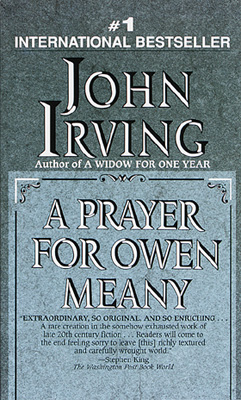
You're A Prayer for Owen Meany!
by John Irving
Despite humble and perhaps literally small beginnings, you inspire faith in almost everyone you know. You are an agent of higher powers, and you manifest this fact in mysterious and loud ways. A sense of destiny pervades your every waking moment, and you prepare with great detail for destiny fulfilled. When you speak, IT SOUNDS LIKE THIS!
Take the Book Quiz at the Blue Pyramid.

Monday, October 15, 2007

Snowbound

Jill and I sleep under an old musty featherbed with the baby, little Jenny, between us. It’s warm there.

The gray light through the plastic sheeting sealing out the worst of the drafts from the old badly fitted windows, tells us that the day is overcast. When we get out of bed, we know the old wood burning furnace in the cellar is out. The sweat freezes to ice drops on our skin. Even when it works, our breath mists. We bundle quickly into layers of wool and cotton over the long underwear that we've slept in. Socks and boots and mittens go on right away before the warmth of the bed fades.

I unravel a wire coat hanger and stab through the thin ice layer in the toilet bowl. Unzipping, I pee, idly trying to melt the floating chunks of ice and thinking that the man who built this house must have enjoyed hardship; the bathroom is as far from the single heating duct as possible. I hear the thunking of wood as Jill feeds the wood stove in the kitchen. Later when the furnace is going, we’ll run water through the copper coils inside it and try to wash up.

There’s still three feet of snow on the ground from the last blizzard. The drift against the side of the house covers the attic window. A week ago I opened the kitchen door, and there was just a flat cold white imprint of the door facing me. We had to tunnel our way out, shoveling the snow into stew pots and buckets, then melting it on the stove. No snowplows have come by. The town always does the dirt roads last. The power and phone lines won’t be fixed until then.

I go down to the cellar and open the furnace. There are just enough embers to get it started again. I rake them into a pile and stack a pyramid of kindling and some small splits of maple and oak over them. I twist some paper into a spill and push it into a gap then blow until the paper catches. When the kindling starts to char and crackle, I close the door and go back up to the kitchen.

The room is starting to warm up. Jill has the stove lit. I warm my hands over it and look into the firebox. A few sticks of kindling are in the bottom with some maple on top. The kindling is burning from the middle forcing the sap out the ends. It has frozen into icicles only inches from the fire.

I go out to the woodshed. I still have a couple of cords of oak, maple and birch, but the cranky furnace doesn’t light easily. I need some softwood kindling to get it going. I bring an armload of wood to the kitchen. Jill’s started some oatmeal and pulled the table close to the heat. Jenny’s wrapped up in so many blankets that she looks like a fuzzy blue ball. Jill pokes the baby bottle into a gap. From the slurping sounds, I figure she’s found the right spot. I go back to the woodshed and open the chute to the cellar. I throw splits and logs down the hole for a solid ten minutes. There's not much room down there; just enough for the wood for a day or so of heat. I pull the cover over the chute and go back inside where Jill is still feeding the baby. It's warm enough now for me to take my jacket off.

I go over to stir the oatmeal. I ladle out some for Jill and sprinkle sugar on it. What little milk the old cows are producing is for the baby. I ladle out another bowl for me, drop a lump of butter into it and reach for the salt and pepper.

“I’m going back to the wood lot and cut down a pine or two,” I say. “Maybe I’ll bring us back a Christmas tree.”

“Do you have to go?” Jill asks.

“Looks like snow again and we need the kindling.”

“Taking the tractor?”

“No gas ... I’ll take Bob.”

“Be careful.”

I finish my food, zip into my coat and stuff gloves in my pocket. I head out to the barn, walking carefully, trying not to break through the icy crust.

Out in the barn are the three cows and Bob, an old gray swayback farm horse. It’s warm in here. The bales of hay above insulate the stalls below and the animals put out a lot of heat. If worst comes to worst, we could move into the barn for a while. I fork some hay into the feeding bins for the cows and sprinkle some oats over it. Bob gets more oats. By the way he moves I see that he knows there's work today.

I get the harness and sit on it to warm it up while I wait for; Bob to finish. The cows look over at me placidly from time to time. I listen to the water trickling into the cistern of the gravity pump from the spring further up the hill, and thank the foresight that made me bury the feed line deep enough to keep it from freezing. I hear a gurgle and know that Jill is washing the dishes.

I fill the buckets and hang them on the nails where the cows can get to them. I give another to Bob who snorts briefly. When he's done, I put the harness on him, and walk him out. I hitch him to the the sledge and let the reins hang free as I go back inside for the twitching hooks on their chains, the buck saw and my axe. There's no gas for the chainsaw so this will have to be done the hard way.

Back outside, it has started to snow. Bob has broken the sledge free from the ice, and started trudging along the fence to the woodlot. The sledge is heavy and packs down the snow. I catch up and dump the hooks, chains, and saw onto its platform, then walk behind on the compacted snow. Bob has the worst part of the job, but there's not much I can do about it. He knows where to go, so I let him make a path for me. We start across the back pasture.

The wind kicks up and the loose snow starts to swirl. It gets up my coat sleeves and down my neck. I pull up my hood and pull the drawstrings to cover most of my face. It gets heavier. Now I can’t see the house or even the fence posts anymore. I can’t tell how far we’ve gotten. Suddenly Bob’s hooves clatter on stone. We’re at the rock ledge near the spring.

Three steps later I hit a patch of ice and sprawl backward.

Lying on my back I feel the pain in my right ankle. A sprain? Please God, don’t let it be broken. I roll over and get the good foot under me. I flail my arms for balance and use the butt of the axe handle to get up. I try putting my right foot down. It hurts like hell, but it’ll bear my weight.

I can’t see Bob, but I hear his harness jingling a short distance ahead. I limp along the rut in the snow using the axe handle as a cane. He has stopped near a small stand of evergreens. I tie him up and choose two of the trees, a pine about 9 inches across and a spruce near 12. My ankle is killing me. I can’t get a good stance with the buck saw, so I just use the axe.

I take down the spruce first. It comes down sweet as anything. I sit on an old stump to rest my ankle. The top of it will make a nice Christmas tree. I wrap a short length of chain around the bases of two of the large lower limbs, jam the sharp tips of the twitching hooks into the the wood and set them with a sharp blow from the poll of the axe. Then I unhook the sledge from Bob's harness and clip on the chains. I leave the axe by the stump, sling the saw over my shoulder and we head back to the woodshed, where I knock the hooks loose. The throbbing in my ankle is still bothering me, but I guess I'll be okay.

I take Bob back to the barn to warm up. Then I go to the woodshed and saw off the top four feet of the spruce and hammer an X of two by fours onto the base to act as a stand. It doesn't want to go through the door, but I get it in in a shower of needles and clumps of snow. The house is warmer now. Jill and Jenny watch as I yank the Christmas tree through the door to the living room and set it up. on the wooden X.

I peel off my gloves and jacket. Jill puts Jenny in the crib where she lies quietly babbling to herself, then pours me a tin mug of coffee. I sit at the kitchen table warming my hands around it.

"Are you done?" she asks.

"Not yet ... there's one more to go."

She kisses me, and unbuttoning her thick flannel shirt, takes my hands from around the mug and puts them on her warm bare flesh under her arms, and holds them there tightly to warm them.  I lean my forehead on her breasts. After a few moments she releases my hands and, stepping back, buttons her shirt.

"Just take it easy, will you." she says.

"Jill ... I'm sorry I got you into th ..."

"Hush," she says, "We'll make it."

The snow has half buried the sledge when we get back to the woodlot. About 25 feet up the pine there’s a big black crow, hawing down at me from a shattered old branch. I pull the axe free from the stump of the spruce and smack its poll axe against the trunk of the pine and the bird drops out of the tree. I think he’s going to hit the ground but at the last minute, out flap the wings and he’s off, deeper into the woods.

Bob stands placidly waiting for the next load. It feels colder. I just want to get this over with and get back home.

I make the first cut. As the notch gets deeper I can see some rot. That should bring it down easier. My foot hurts, I’m cold, and I’m lonely. I move to the other side and start the felling cut. One chop, two . . . I hear a crackling sound. I back off from the tree fast. You never know.

My ankle twists under me and again I land on my back. The tree is falling towards me. The crow’s perch, the shattered branch points right at my heart.

Waste not

Today is Blog Action Day

In an earlier post, I reprinted a recipe for brawn, a dish similar to head cheese. The recipe used to be a common one, but these days, here in the US, it is a rare cook who will make it. There are several reasons for this; people don't cook on the scale they once did, butchering is no longer a local activity and the cost of transporting the raw material is exorbitant, factory farming and the disturbing feed given to the animals have created new diseases to be wary of, factory butchering and the filth of the process makes even the most pristine looking cuts of meat suspect.

These are all factors that must be kept in mind. But there is another overlying factor that keeps these processes in place. Even the poorest of us is too spoiled by distance from reality to understand what we are eating.

Let me be clear. I am neither a vegetarian nor an animal activist. I like both tofu and beef. I am as happy with a meal of barbecued short-ribs as I am with one of tabbouleh, hummus and pita. I have no philosophical or religious aversion to having an animal die to make a meal for me. What bothers me though, is the waste and the disrespect for the life lost that is at the base of our thoughtless consumption.

Tony Bourdain talks, in one of his books, about visiting a farm that belonged to the family of one of his cooks. In his honor they decided to have a feast and, to that end, shortly after his arrival they slaughtered a pig. His description of the process, to many people would seem horrifying and even perverse. To me it was beautiful.

Every part of the pig was saved and used. Nothing was wasted. The blood, the internal organs, the feet, the head, all of it was salvaged for use. The idea of throwing out any portion of an animal that had died to become their food would not have even occurred to these farmers. The greatest honor you can give is to use it all.

I like Bourdain, and after reading that description I liked him even more. It was obvious that he was going for the shock value, yet at the same time he made it clear that this was the way it SHOULD be done.

How have we become so insulated from the very food that nourishes us, disgusted by bits and pieces of animals that were the main source of nourishment for our grandparents?

Bloggers Unite - Blog Action Day

I suspect that the culprit is greed; the greed of corporations wanting to sell only the products with the highest mark-up and our own greed nurtured by a perversion of the American Dream that each of us, can live like the rich even if we are not.

The term "conspicuous consumption" first appears in Thorstein Veblen's book "The Theory of the Leisure Class". and originally described how members of the upper class used their wealth to demonstrate their social standing.

These days it describes how those with expendable incomes buy products to enhance their status rather than to satisfy a true need. There is a theory that the industrial age changed our lifestyle and created a habit of fashionable consumption.

In China, not so long ago, women's feet were bound and their ability to work destroyed, in order to make them more attractive. But what was the attraction? Uselessness. A woman with bound feet was, or at least was intended to be, an unproductive luxury for the well-to-do. She was a drain on resources that only the wealthy could afford to have in their household. In the United States, we have the same fascination for the 'dumb blonde', a rich man's plaything, a status symbol. I guess that there must be some deep and complex set of psychological triggers that attract us to the luxury of being able to reduce others to mere furniture for our lives.

Much of this degradation of women has become diluted in real life, although the various media seem to cling to the ideas tenaciously.

But even though women may be freeing themselves from these idiotic archetypes, the notion of showing power through waste and uselessness still pervades today's society. Limousines and SUVs guzzle gas. Huge masses of fertile land are chemically treated and lie fallow as lawns or golf courses, trees are pulped to create newspapers that are barely read before being discarded ... the list goes on-and-on.

Less than one hundred years ago, our grandparents would have been horrified. For them, thrift was a virtue, a useful object was one that was durable, one that could be used again and again.

Let's take, for example, a simple item. We drive to the supermarket to buy a glass jar of spaghetti sauce, drive home park on the driveway next to our front lawn, and take the jar into the house. We dump the contents of the jar into a pan. If we're diligent, we pour some water into the jar to get the dregs out and consider ourselves frugal. We throw the jar into the trash, or, if we consider ourselves 'green', we put it into the recycling bin.

Now let's look at it a different way.

We use a dollar or more of gas to get to the supermarket where we buy some spaghetti sauce that has been made from ingredients that required fuel to plant, cultivate, harvest, transport, refrigerate, cook, and package in jars that required fuel to make, sterilize, transport, fill, label, pack (in boxes that have gone through a similar process), transport, store, transport again, store, display in a buidling that requires even more fuel for temperature and lighting. Then we dump the pre-cooked food into a pan and use more fuel to re-cook it. Then we throw the jar away or recycle it. The first wastes the energy that went into its creation, the second wastes the energy that goes into its recreation.

And this is just the tip of the iceberg. I'm not even going to get into the energy that goes into creating the machines that do the processing, or heating the water for washing dishes. I could also rant about the savings in energy if we were to grow the food in our backyard, but the fact is that it's like a huge line of energy consumption growing and sucking down the fuel so that we don't have to expend the effort that our parents and grandparents did.

Are you going to hear a call to action? A list of simple things that you can do to stop this insane waste?

No.

There are no simple solutions ... no one size fits all. I'm not going to tell you to grow tomatoes in your backyard or get a smaller car, or re-use the glass jars you normally discard.

That would be too easy. You will get into the habit and it will become a kind of knee-jerk, feel-good action that might or might not have any effect.

No. What I want you to do is much harder than that, and much easier.

I want you to think.

When you cook the spaghetti sauce, when you drive, when you wash the dishes, when you take a shower, think about the fuel and resources that you are using. Ask yourself about the plastic, the soap, the food, the fuel, the storage think about it all.

Try to justify it. You're a logical intelligent person who has been seduced by having things made easy, by having things done for you, by having it made easy to NOT think about what supports your lifestyle.

I'm not going to make the same mistake.

Think about it. Understand what powers your ability to waste, justify it, rationalize it.

... and if you can't, I'm sure you'll figure out for yourself what you need to do.

THINK DAMMIT!

Thursday, October 11, 2007

A note on the previous story

Your faithful writer does not play the role of Walter in the parable.

Much to his shame, and discomfiture he plays the demon.

A Parable of Demonic Possession

... and the smoke solidified and became flesh. Standing near the magic lamp was a demon in the form of a man whose face was innocent of guile.

"Oh," he cried. "I am much relieved to be released from my cell. Thank you for your unselfish deed, good stranger. In return for this, shall I give you a gift." And he proferred to Walter the smallest of boxes.

Walter took it in his hand and looked upon it. It was black as a moonless midnight and upon the lid were jewels which shone with their own internal light and formed the light into magical runes. As Walter lifted the lid of the tiny box angelic music burst forth. Upon the underside of the lid a magnificent stone displayed an image of she whom Walter loved, and within the lower part were more jewels arrayed in ranks which bore yet more of the magical marks.

"Nay sir," said Walter, "I have neither the skills nor the magic to use this sorcerous contrivance."

"You need neither," smiled the demon. "For it is the simplest of devices, and it is already attuned to you. It is yours and yours alone. It is your servant and will do your bidding and no others. It is my gift to you. It will let you whisper into the ears of distant friends, and let them tell you their deepest secrets. Within it you may store all the words and music of your life. Images of those close to your heart may be captured therein. It will guide you through your day. All the knowledge that you keep on scraps of parchment can be kept inside and found by a mere touch upon these glowing runes."

And Walter was persuaded. He emptied the contents of his pockets, into the box, and the man showed him the incantations that would make the box work. Truly it seemed a blessing for it foretold storms, and announced the arrival of minstrels, but most seductive of all was listening to the whispers of his friends as they spoke from distant hills and towns.

For weeks, Walter continued in his days, trudging behind the plow, with one hand upon the grip and the other pressing the whispering box to his ear. The furrows plowed were not as straight as they had been.

"That is easily fixed," said the demon when Walter returned. "For a single ducat, I shall give you another box which you may attach to the plow so that you may listen while guiding it with both hands upon the grips."

And Walter returned again and again to the demon, for now he wished to watch the minstrels perform without making the long journey to town, or to hear immediately of a fire in a distant neighbor's corncrib.

Then one day a messenger appeared at the door of Walter's cottage with a scroll that required the payment of ten ducats.

"What is this tax?" he asked the demon.

"It is for compensation of the service provided to you," said the man with the guileless face. "Hordes of sprites and demons have been harnessed to do your bidding, their very lives have been bound to the runes of your box. But they must eat and drink and rest else they will not be able to do what you will. This tax is to provide for them."

Walter thought for a moment, "... and what if I do not pay?" he asked.

"Then all must be undone ... and it is no trivial matter. For such an effort you must pay 240 ducats, for these servants have been bound to you for two years, and the undoing of these spells is a hardship."

This box, then, was not so much of a gift."

"Of course it was," cried the demon indignantly. "It is a beautiful box and it is yours alone to command."

Walter walked sadly away, his purse lighter by ten ducats.

Some days later. He stood by a well, drawing up a bucket of water with one hand and listening to the whispering box, when it slipped from his grasp and fell into the water. Instantly the glowing gems went dark.

"Water breaks the spells of the box." said the Demon. "I will have to make you a new one."

His eyes now opened to the machinations, Walter asked the cost.

"A mere 200 ducats."

"If the spells are broken, then the servants are free to go and I need no longer feed them?" Walter wondered hopefully.

"Nay, they are still your servants e'en though you can no longer make them do your bidding, and you must continue to pay for them until the time of their binding is complete."

And Walter threw the little box into a deep hole and covered it with earth and rocks so that others might not be entrapped by the demon.

He went home and sat by the fire and waited for the messengers to come for his possessions.

Saturday, October 06, 2007

Two days ago I was sitting on the concrete base of a light pole in the mall parking lot smoking a cigarette.

The parking space by the pole was empty.

As I sat there enjoying a few moments of quiet. a large, black, suburban assault vehicle pulled into the space, screeching to a halt just inches short of where I sat. The doors popped open and a 30-something couple emerged. They both started immediately coughing and retching and waving their hands in front of their faces while glaring with shock and horror at the small tube of tobacco in my hand.

I've seen their type before and just ignored them, knowing that if I didn't engage, they'd go find something else to be critical of.

They did. rolling their windows down a bit ... which I found unusual considering the offense they had taken at my gall to have a habit of which they did not approve, they slammed the doors and went off to buy something more.

I watched them leave and was returning to my reverie when my eye was caught by some motion in the mini-monster truck. A sharp nose and bright eyes peered from between the seats, disappeared, then a standard poodle leaped over the seat backs and into the front passenger seat.

It looked at me, and I thought I detected a sense of commiseration. We nodded at each other companionably. Then the poodle opened its mouth and, tongue lolling out briefly, seemed to laugh.

As I watched, it moved to the driver's seat ... and squatted.

I field-stripped the last of the cigarette, put the filter in my pocket, and strolled past the open driver's window. A quick glance inside confirmed my suspicions.

Suddenly the poodle's head pushed out of the opening. I patted it for a moment and went in to get back to work.

Monday, October 01, 2007

The Rake's Progress

The leaves are just beginning to turn and the needle fall for the white pine has covered the ground beneath it with a soft brown carpet. That means it is time for my yearly contemplation of modern man's failure to comprehend the simplest of things.

Yearly, in this case, does not mean that it is an annual event; it means rather that it starts a new year long musing session.

By the end of October, my suburban neighbors will be hard at work ensuring that the, to them, ugly brown detritus of the trees is raked up neatly and bagged. The bags will be stacked at the curb for the town to pick up and haul to the dump. Every year I ponder this folly before, browbeaten by my wife, I succumb and do the same.

But it always bothers me.

It's not that I mind the work. It's that I don't understand why it should be done other than as a sop to the others who live on our street.

My reasoning is simple. Nature is full of elegant design. Sometimes that design is quirky, but nonetheless it has a meaning of its own. I could talk about Darwin, or D'arcy Thompson's wonderful book "On Growth and Form" or any of the several volumes by Stephen Jay Gould such as "The Flamingo's Smile" or "The Panda's Thumb", but I will not. Instead, I will just talk about the design in my own yard.

I look at the maple tree next my my driveway. Its leaves have not yet turned but they will. As the days get shorter, the chloropyll will gradually leach out of the leaves, taking the green color with it. Red will start to become the predominant color. (The leaf is not actually changing color, the red has been there since it emerged in spring. In fact, the reason the tree is called a "red maple" is because when the leaves first appear and before the chlorophyll starts working they are red.) Their hold on the twigs, so firm throughout the Spring and Summer becomes tenuous and they start to fall off.

But why do they fall? Why do deciduous trees drop their leaves for the cold season? Wouldn't it conserve energy for the tree to retain the leaves and re-activate them in the spring?

Well certainly one reason is to reduce the weight of the potential snowfall on their branches. Unlike the more flexible evergreens, maples are hardwood. Their branches are more brittle. They also grow more slowly than their softwood brethren. Dropping leaves is a way to minimize the surface on which the snow's weight will rest.

Nature isn't simplistic. Evergreens will drop some of their needles, too. That's because there are two more reasons for the leaves to fall.

One of these is the protection of the roots. Although the leaves may scatter, the vast majority of them stay where they fall blanketing the roots of the tree ... and I use the term blanket on purpose. The leaves will insulate the roots from the frost and ice to come. Like an electric blanket, they even will provide additional warmth as the wet leaves decompose and the mulch turns into compost.

And that's the last main point. The decomposition of the leaves not only warms the roots, but returns the nutrients that the tree needs back to the soil, ready to be picked back up as the sap rises in the Spring.

It is a cycle that is truly elegant. A full circle of life and death efficiently letting the tree nurture itsself.

Who was it that persuaded us that interrupting this process was right? How have we managed to persuade ourselves that dead leaves are eyesores and serve no purpose but to create an opportunity for mild exercise?

It is a puzzlement.

Gone but not forgotten

I reached an unusual milestone today.

I have actually reduced the size of my library to the size of my study. Parting with so many at a time was not a sweet sorrow, but a painful one. But, it had to be done.

The remaining books are shelved (three 7' high by 4' wide bookcases and one 5' high by 5' wide one) with minimal double shelving, or boxed in the closet (six cartons).

I figured out a neat trick, too. A large office supply chain has some very nice boxes of various sizes. One of thes turns out to be the perfect size to hold ephemera (such as small format magazines from the 1860s and maps) that I use in my work. I label the spine and shelve them right next to the books.

still have too much loose paper floating around, but my work environment is slowly but surely becoming controllable.

I hope that the diminished clutter will lead to increased productivity, but, at the very least it will make it easier when it comes time to move.

Sunday, September 30, 2007

One More Ghost Story

This is like pistachios. I'm getting addicted to it.

At midnight we found a small schooner drifting. We tied alongside. There was no-one on the Cleo out of Salem, MA.

My first mate swore as shadows coalesced on the deserted vessel then streamed over to ours. The shadows took their places next to my own men.

We set sail for Gloucester, but the shadows seemed agitated. I hazarded a guess and turned more southerly. They calmed.

We made Salem harbor at 2 am and tied up. When the last bight was cast around a bollard, the shadows streamed over the rail and disappeared into the darkness of the sleeping town.

Another Ghost Story

Oh my. I guess someone knows that I can (as Oscar Wilde once said) resist anything but temptation, and challenged me to do more. So here's another.

When I see Judy cross the street toward me, my heart skips. Her movement is like poetry. The faint hint of a smile sits at the corner of her mouth. My guts ache at her easy walk, her soft, rusty ringlets moving as if alive.

It takes a moment to realize that it is raining, that there is no wind, that I last saw her as a walnut lid was lowered ... but now she is close and my longing has outrun my logic and I reach for her. A breeze tickles the hairs of my moustache ... and she's gone.

I had to edit this. unfortunately, I posted it with too high a word count. It's down to 99 now.

A Ghost Story

A friend has a blog called The Dog's Pajamas. She recently posted the following challenge on it.

Write a ghost story in 100 words or fewer.

I'm a modern man and a logical one. It's 1982 and there's no place for superstition. So I am startled when the woman walks through one wall, drops a letter on the floor and continues out the opposite wall.

Intrigued I go to look at the envelope.

How odd ...

It's postmarked 2007.

If you decide to take up the challenge, link back so I can see it.

Friday, September 28, 2007

Eulogy

I disliked you for our entire acquaintance. You incessantly pestered me with your needs, your hungers, your stupid refusal to accept that I wasn't your friend. The constant movement, your monomania drove me to distraction and I would have been happier had you never been born.

It's not that your life was useless, or meaningless, life in itsself confers purpose, I just didn't want to be included in yours. But you couldn't leave me alone, and my antipathy to your presence grew to rage. In that rage, I did try to kill you ... okay, I tried several times ... but I failed.

Now you are dead ... and I am sorry.

I look down on your still and lifeless corpse and I am moved to tears ... four tears.

The first tear is for having lost the satisfaction of killing you myself. The only solace is that perhaps my repugnance drove you to suicide.

The second tear is for the life snuffed out, for, in spite of my hatred of you, I know that life is precious and even a small part wasted is a tragedy of sorts.

The third tear is for my spiritual pain at being torn in two so different directions.

The fourth and final tear is for another loss. It is for the sorrow, the deep and abiding loss and frustration as I pour my carefully brewed cup of French Roast coffee down the drain taking your little corpse with it in a kind of caffeinated viking funeral.

Wait ... did I see a slight flutter of your wings. With a rising sense of fulfillment, I reach for the tap.